🧵 View Thread
🧵 Thread (19 tweets)

We have another RWBB vs Peater battle on our hands and as a member of both parties I’m going to tackle this with some broscience. Here’s me at my leanest and fattest. 195 lbs 10% bodyfat and 230 lbs fat fat. https://t.co/dE0yAPGWuR


I’m going to start by saying no Peater thinks you won’t lose weight if you starve yourself. But the metabolism doesn’t just have one gear or mode. What constitutes the weight of the body is made up of dry muscle, fat, organs, bones, vital fluids, water, glycogen, etc.
How one loses weight is just as important as how one gains weight. Losing weight without care can go horribly wrong. The type of foods consumed, hormones and stimulation of the body all factor into whether one modifies any of the different tissues of the body.
Extreme weight loss done recklessly can sacrifice a very harmful and disproportionate amount of muscle, organs, and vital fluids, leaving more fat than is desired. This is not only unhealthy but never holds long term.
Extreme weight loss like Biggest Loser, Ozempic, or those that do surgical interventions like the lap band; extreme restriction, whether external or internal, the result is less muscle and a destroyed metabolism. Weight is regained and they’re worse off than when they started. https://t.co/quesjoKAfy
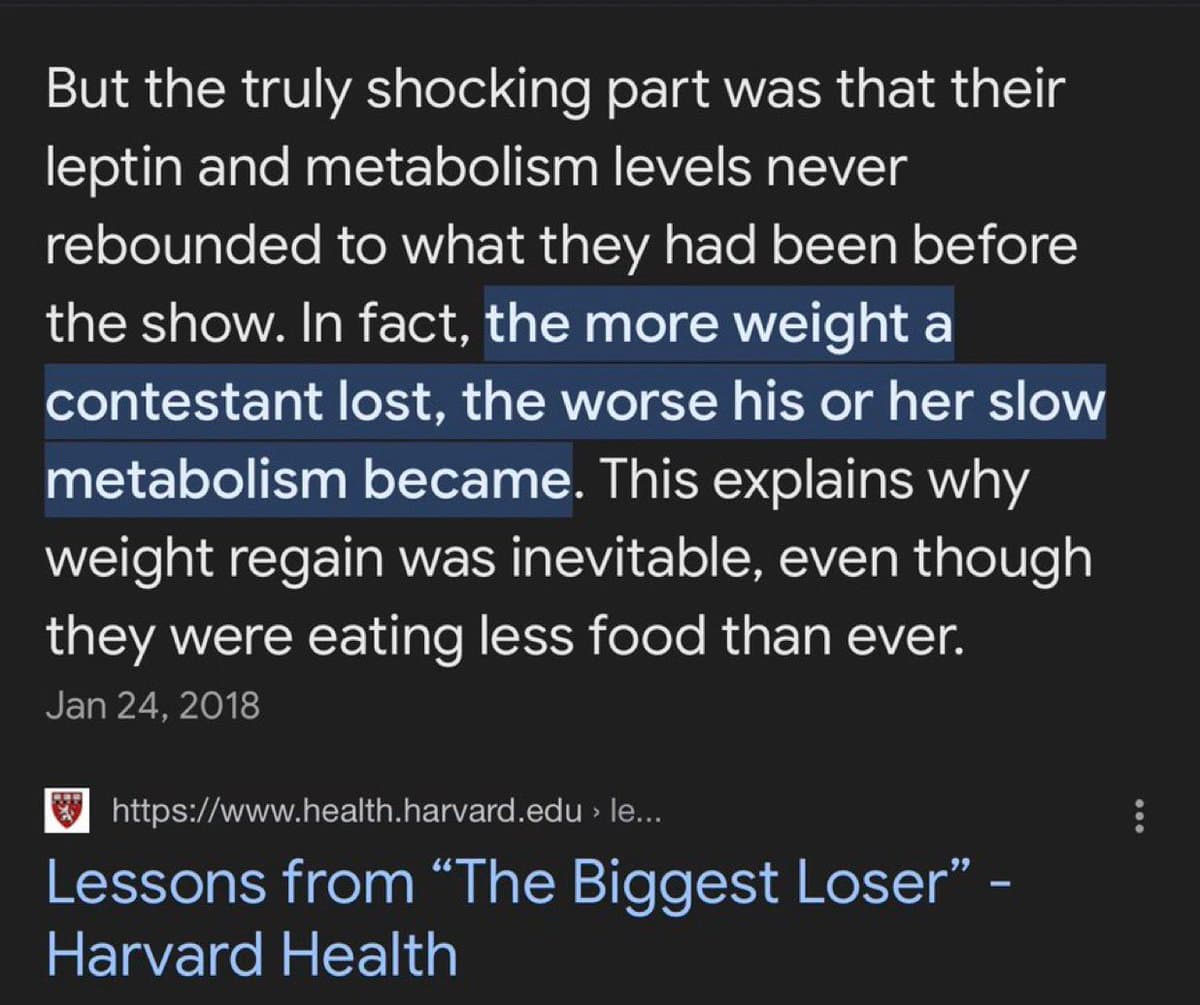
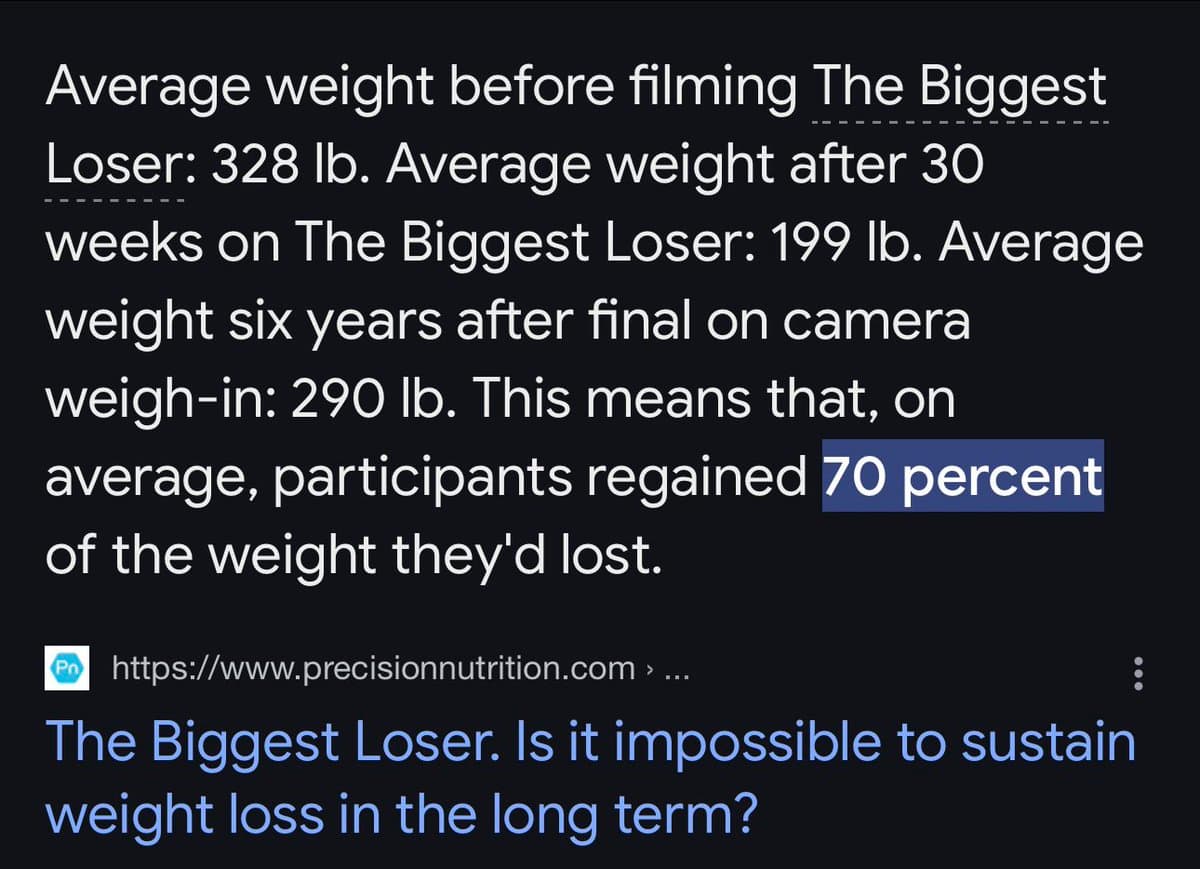

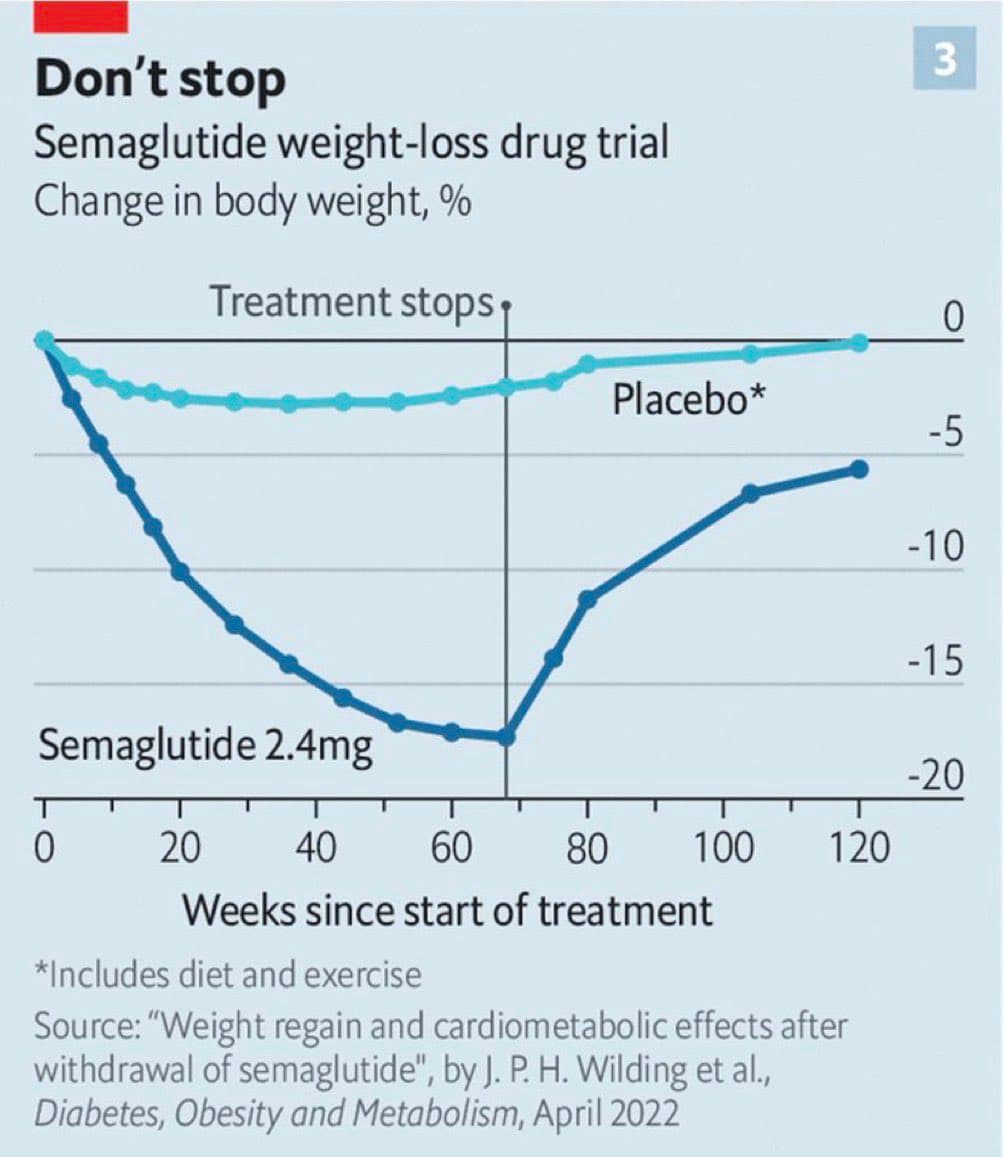
Even the most seasoned bodybuilders and diet coaches know that the macronutrients matter greatly, but also that you must reverse diet, incrementally add back calories, to bring the metabolism back up to normal function without weight gain. If good habits aren’t learned, disaster.
But in order to need weight loss you have to first have had excessive weight gain, and that’s brings us to what causes weight gain. People think we used to eat less and move more, but we really didn’t. People used to eat a ton of food and stay thin.
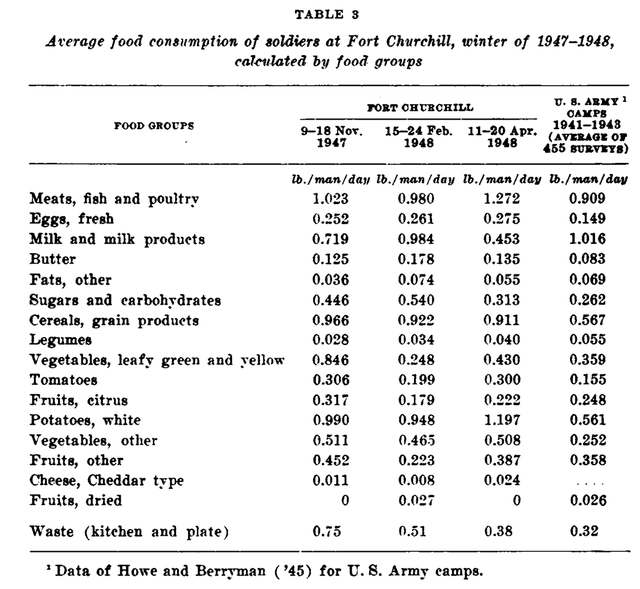
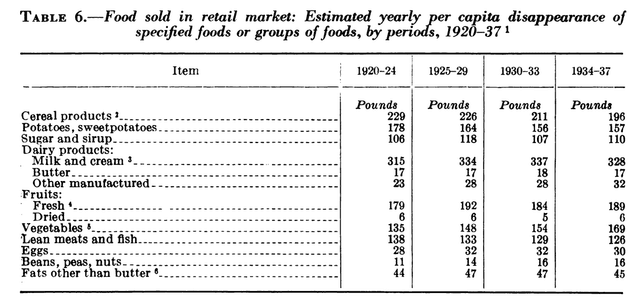
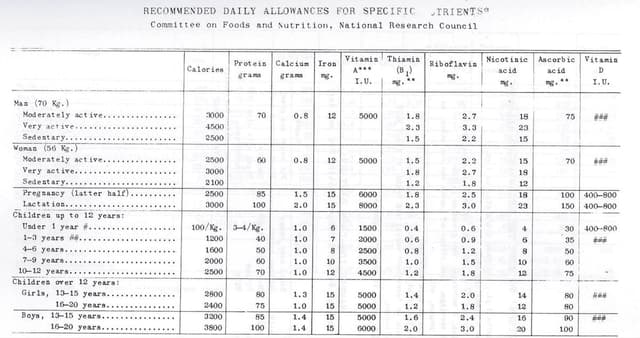
EVERYONE used to be thin. They ate over 3,000 calories and 100 grams of sugar per day. (and it wasn't due to more exercise): In the 1960s and prior, the obesity rate was consistently under 10% and has only gotten worse since, now sitting at about 40%. In the late 1940s, a study was conducted on U.S Army soldiers to measure exactly how much they were eating, and despite only weighing 157 pounds on average, the men gorged on nearly 6,000 calories per day. The researchers stated that “judging by interrogation and observation, the average man was moderately active and spent about three hours daily in the open.” The soldiers’ diets consisted of milk, meat, bread, potatoes, fruit, vegetables, eggs and even lots of white sugar! That’s right, the soldiers were putting away anywhere from ¾ of a cup to half a pound of refined sugar daily! Another example is in 1945, where US soldiers were recorded as having eaten an average of 3,700 calories a day, including over 400 grams of carbohydrate and 180 grams of fat daily. The researchers documenting this stated, “there was no significant variation of caloric intake with degree of activity of troops.” Around the turn of the 20th century, people from Denmark were consistently recorded consuming over 3,000 calories daily. The record keepers noted that, “The most prosperous of the… families again reach the same level as the agricultural worker in their consumption of calories… The more well-to-do classes… [mostly doctors], obtained a fair supply of energy, particularly when their restricted amount of muscular work is taken into account.” In other words, the rich ate a lot, didn't move much relative to the laborers and farmers, but were still exceptionally thin, as the researchers here stated that a man of “normal weight” was just 154 pounds! The US' 1939 book of agriculture gives us a glimpse into the diets of the time. On average, people consumed around 3,500 calories daily, with the wealthiest consuming well in excess of 4,000 calories daily, again weighing around 154 pounds with just moderate activity levels! Throughout the 20s and 30s, the US bought anywhere from 106 to 118 pounds of sugar per person per year, equivalent to right around 140 grams or ¾ of a cup of sugar daily! Bread and potatoes were also consumed in massive quantities, making this a high carb, high sugar diet. They ate so much saturated fat that the fat intake was recorded as either “butter” or “fats other than butter.” They also consumed plenty of meat including organs and eggs, while so-called plant proteins like beans, peas and nuts were essentially negligible. In 1943, the average diets of the US, Canada, and the United Kingdom included TONS of white sugar at over 100 grams, or half a cup, per day, and plenty of milk, meat, fruits, vegetables, potatoes and bread. This all amounted to supplies north of 3,000 calories, including around 400 grams of carbohydrate and 130 grams of fat per day. The average man and woman were listed at 154 and 123 pounds, respectively. They also maintained their lean physiques on no more than 100 grams of protein per day. Another analysis from 1945 further confirms these trends, showing that the diets of the US, Canada, and UK were very similar to that in 1943. The dietary guidelines of the pre-obesity era were the complete opposite of today. Calories were treated like any other nutrient, they were concerned about people getting enough, whereas today the guidelines have calorie limits. Recommended intake was AT LEAST 3,000 for an average man and 2,500 for an average woman, who weighed 154 and 123 pounds respectively. At least 3,800 calories was considered a good target for young men 16-20 years old, and teenage girls were told to eat an insane 2,800 calories. They also provided meal plans, suggesting a diet of milk at every meal, meat, bread, potatoes, sugar, fruits and vegetables. Getting your recommended amount of sugar and calories for the day apparently didn’t make anyone fat! One of the most famous studies in the history of nutrition was the Minnesota Starvation Experiment, which took place in the late 1940s. These men maintained an average weight of around 150 pounds, yet ate well over 3,000 calories daily! A typical dinner on this maintenance diet was roast beef with gravy, whipped potatoes, tomato salad and ice cream for dessert. In 1942, the average amount of calories per person purchased was around 3,500, and that number jumped up to around 3,800 calories in 1948! Fruit, vegetables, dairy, meat, bread, potatoes, and 1-2 pounds of sugars and sweets per week. This trend continued into the 1950s, where English factory workers were on average 5'7 and 147 lb and ate 3,500 calories per day. This included non-active workers. Clearly, our not-so distant ancestors ate way more, and ate lots of things we think of as unhealthy today, but they did not have the health issues we currently struggle with. Ultimately, the explanation here is that our metabolisms have been completely and utterly decimated over the past 100 years. What is it that slows down the metabolism and causes weight gain? Lots of things can do it, but a few key ones are: • Poor thyroid function • An excess of polyunsaturated fats (seed oils) • Inadequate micronutrients • Suboptimal light environment / lack of sunlight • Dysregulated circadian rhythm • Digestive distress + increased serotonin • A lack of muscle mass • Chronic stress • Chronic inflammation • Excess estrogen • Environmental toxins People from past eras ate mostly animal fat: butter and cream, whereas today we eat mostly vegetable oil, which has anti-metabolic and thus fattening effects. We don’t eat the whole animal anymore, including all of the tendons, organs, and even the glands that produced hormones, neglecting a unique set of compounds with beneficial effects. Then there’s pollutants like BPA, heavy metals, PFAs, parabens, and so many more that get stored in fat to protect the rest of the organs from their toxicity. Spending less time outside, in communities and in nature, has decimated the microbial environments in our bodies, making us more susceptible to bacterial overgrowths in the gut that end up fattening us up. Our food has become a smorgasbord of emulsifiers, added vitamins, gums, colorings, flavorings and so much more that inflame our digestion and leave us ripe for fat gain. Since the birth of big pharma in the 1940s, we’ve been exposed to increasingly higher loads of drugs that poison our energy metabolism, even if we aren’t prescribed them. Even the light we get exposed to, enriched in blue light and lacking in the rest of the natural frequencies, plays a role in us putting on weight. Our ENVIRONMENT has become obesogenic.

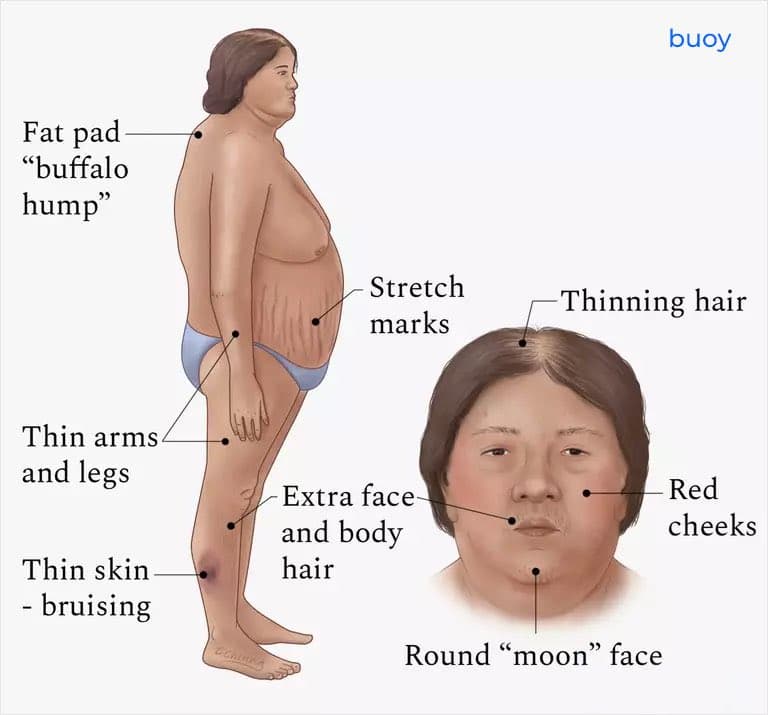
To understand how someone can get fat without eating more, there’s Cushing’s Syndrome - pathological cortisol excess. In this state, the body will start breaking down muscle, bone, skin, even hair, and start depositing all this former healthy tissue as fat across the body. https://t.co/Y1iS41ZxB6
@JoshRainerGold This may be fixable by eating shit.https://t.co/HPJKfmIuiz
@ultimape @JoshRainerGold https://t.co/oHEIOGdQYC
@TakeThiamine @JoshRainerGold It'd better if western gut wasn't so fucked we can't make B1 or B5 with our gut. neutralizing excessive cortisol production by addressing gut health via B1 or sodium butryate works to regulate HPA if you it also boostraps a healthy gut as a side effect. https://t.co/j1qeA4HXg5
@TakeThiamine @JoshRainerGold Garlic also helps here if it's driven by oral candidiasis, interestingly it improves B6 metabolism too.Carrot salad with garlic and some other antifungal stuff can help.https://t.co/wxlc8OEe8d
@TakeThiamine @JoshRainerGold Dumping in a ton of B1 to help support gut species that promote Butyrate and other anitfungal stuff is an interesting approach, but it doesn't work for everyone. Adding carrot salad can help.https://t.co/UWZWGo18ja
@TakeThiamine @JoshRainerGold Excited to see @EO_nutrition's work on Alzheimer's and B1 get published.https://t.co/6mZ13zpwBt
@TakeThiamine @JoshRainerGold @EO_Nutrition irregularly high cortisol metabolism shows up in that condition, as well as autism. B1 didn't work for me tho until I did the FMT due to Crohn's.https://t.co/VcyTCVY38K
@TakeThiamine @JoshRainerGold @EO_Nutrition Did taking B1 double your grip strength? i'm curious if it had the same impact as my FMT.https://t.co/lop3XAxt2g
@TakeThiamine @JoshRainerGold @EO_Nutrition I got fired for talking to my boss about doing my FMT lmao. Literally not paid by big poopie.https://t.co/xvL6uWCESq
@TakeThiamine @JoshRainerGold @EO_Nutrition Bill gates can eat my shit.https://t.co/0907lC0fn7
@TakeThiamine @JoshRainerGold @EO_Nutrition Have you tried the poopie :3https://t.co/eqDW0g0hbP
I fixed a cancer assoc. w/ H Pylori before I was able to hibernate. "Usually, gastric MALT lymphoma is a low-grade lesion, but it can turn into a high-grade lymphoma. Patients who have H. pylori gastritis are at risk to develop gastric MALT lymphomas." https://t.co/6noPsrMS8g https://t.co/ASGEeFyUSg