🧵 View Thread
🧵 Thread (33 tweets)

How do we get 1M people to Mars in 33 years? Let my family of nerds tell you: #Mars2020 #CountdownToMars https://t.co/u7ZiePGJKX

Why is this feasible now? - @SpaceX's Starship will bring down cost to LEO to as low as $20/kg (!) - You only need $6B/year from 2024-2028 until Mars breaks even - Over $6.03T can be gained in growing the Martian economy over three decades, so the incentive is very strong
(By the way, most of our work follows @CJHandmer's excellent book, How to Industrialize Mars. It's the single greatest thing I have read this year and I implore you to check it out.) https://t.co/9IA9SE7e4o
Our entire thesis starts from this plot by @CJHandmer. Here, we see that the main bottlenecks to settling Mars are: - population size - how much mass they can produce on their own https://t.co/k7Z2BcTmW5
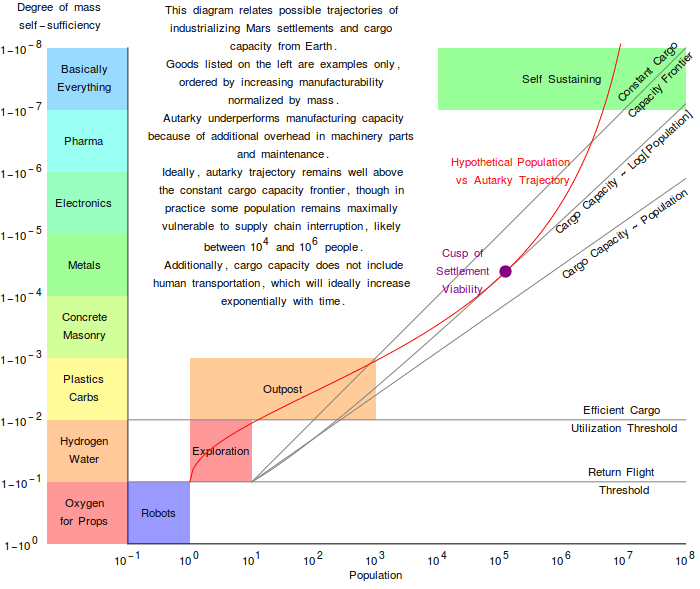
We divide this plot into five Phases: a Prelaunch phase, then Phases I-IV: https://t.co/McDuA8e1IP
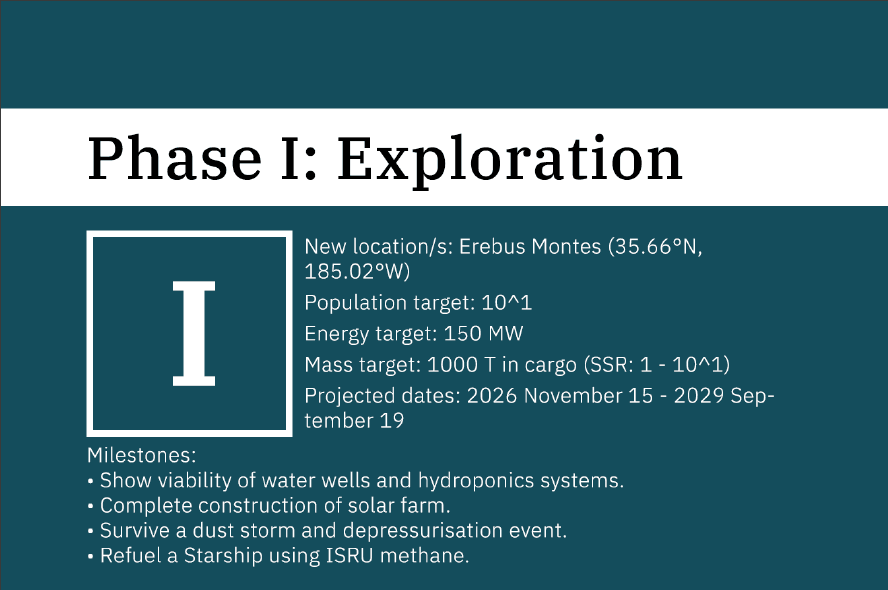
That's ambitious! We are literally going to spawn a first-world country on another planet tens of degrees colder than the South Pole, in near-vacuum, with no ready access to supplies. If you don't beam at the thought of solving that, you are not ready for this. 😎 https://t.co/09740pYw8J

Why a Prelaunch phase? Every person on Mars will use up ~1.5 MW of power to sustain the entire community. That's a lot, and you'd need roughly 3.6 km^2 of solar panels to sustain 100 people, which can be laid down remotely in our chosen landing site. Which is at...
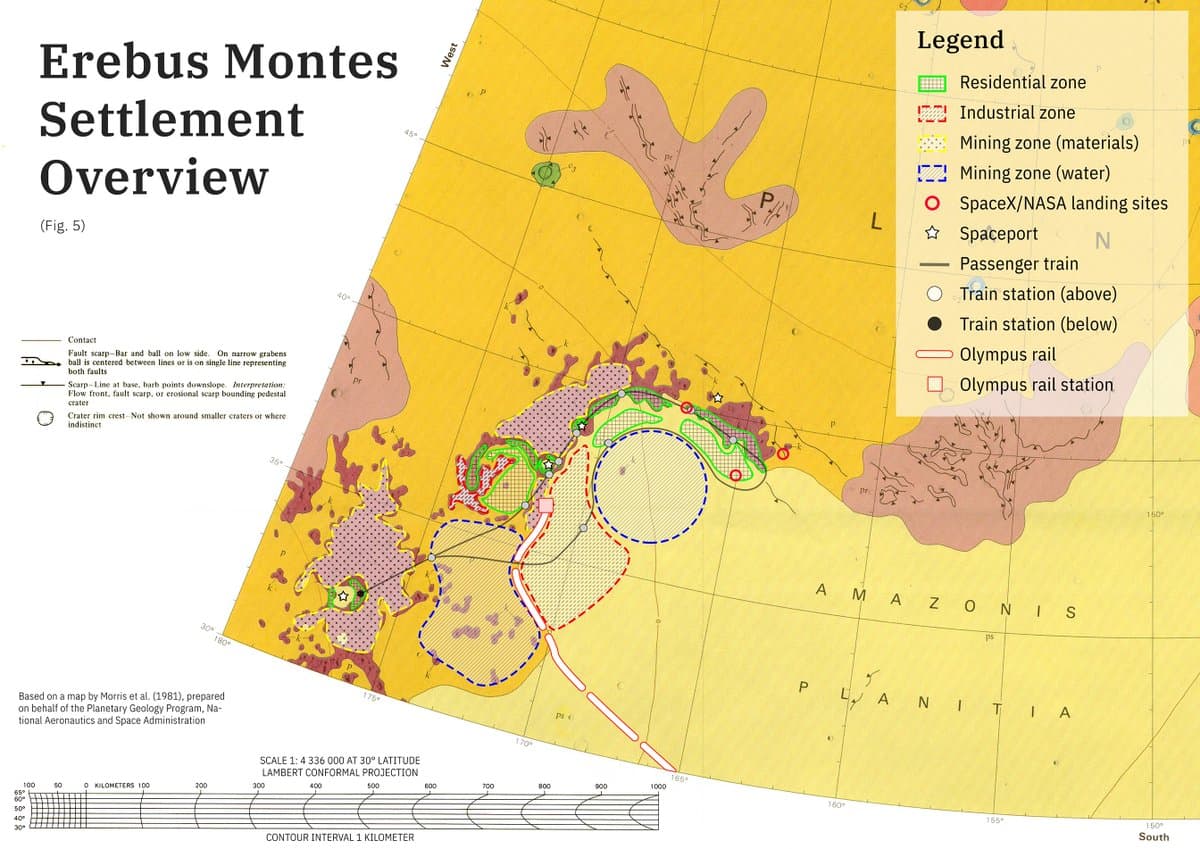
Erebus Montes. Why? Because you can drill down < 5m there and get water ice. https://t.co/Qec0aNSmEj

Here's what Erebus Montes will look like by the end of this century. We have: - crater rim cities - spaceports - @boringcompany tunnels - a 2600 km railway from Erebus Montes to Valles Marineris https://t.co/Tjeai6udbs
Before we move on, I want to say we are forever indebted to Limits of Growth and Donella Meadow's work on Leverage Points. In fact, this entire thing was an answer to the question: "How can we treat the city as a system?" https://t.co/SnkG0SECPO
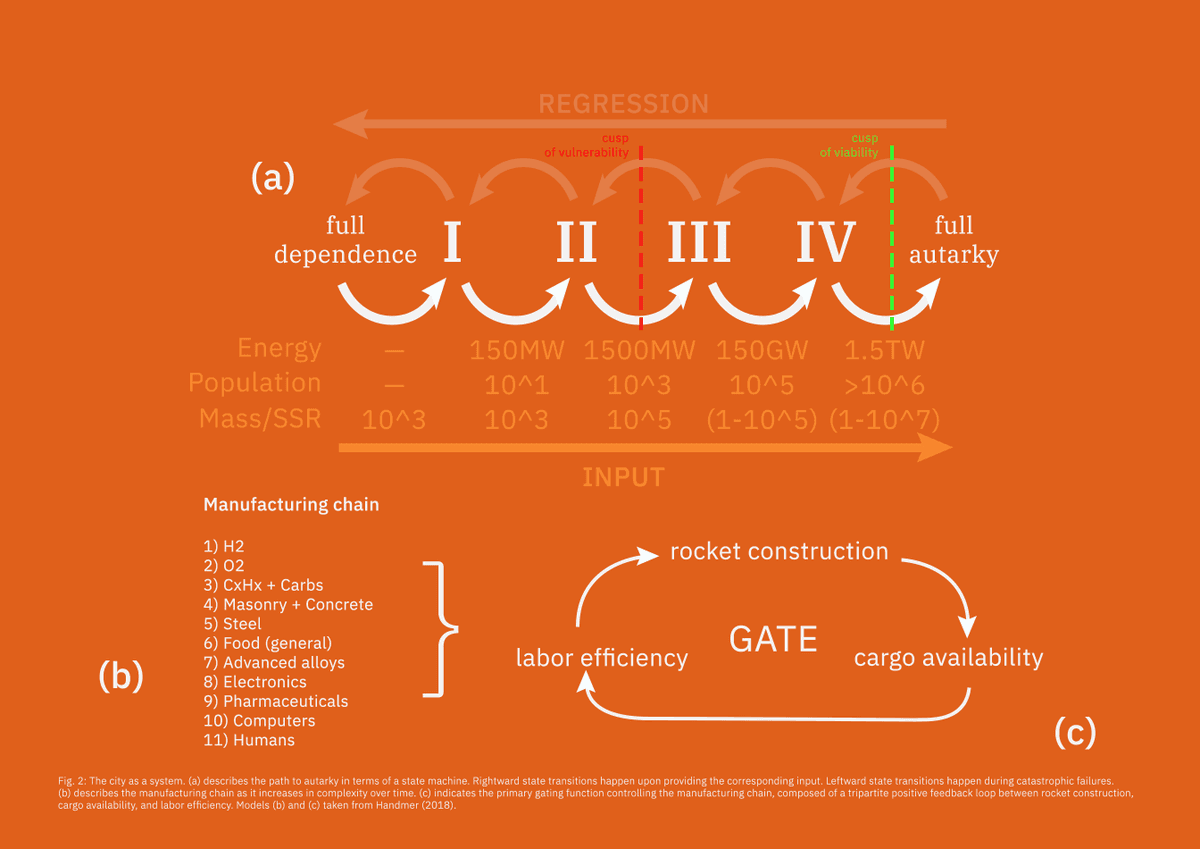
Really, with Mars being such a hostile environment, a system designer must have survival at the back of her mind at all times and at all scales. Thus, we treat each Phase as a modular, self-sufficient community unit you can plop down anywhere on Mars with minor modifications.
So all right. We have @seasteading on Mars. We know how much energy and mass we have to input to get to a certain development phase. But what makes all of it worthwhile? (aside from, y'know, how *freaking awesome* it would be)
Remember this part from before? We need to scale up entire industries from scratch and we need to do it quick. https://t.co/g4uRlTTmdz
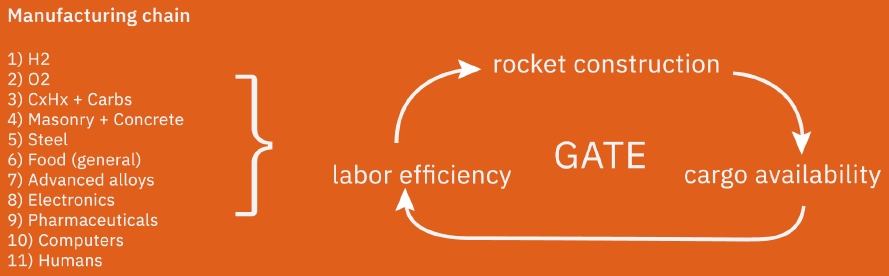
Architecture. Martian bricks are stronger than steel-reinforced ones. And even if you need steel there, you can literally go and pick up iron from rocks. https://t.co/IPJ06KLHsr
These facts, along with having 38% Earth's gravity imply Mars will usher a new era of hypervertical structures the likes of which are literally impossible on Earth. https://t.co/hI1MyphqLh

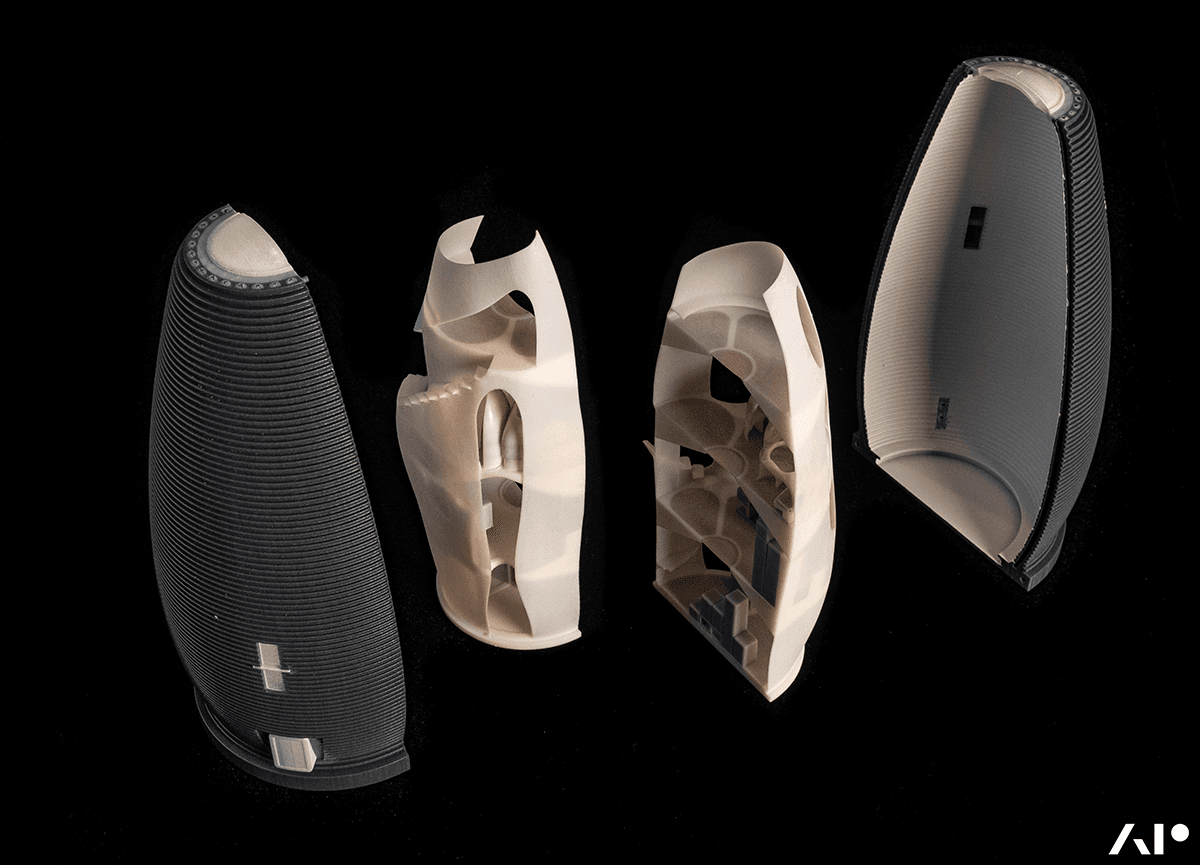
Plastics and electronics. The complexity of making these things in situ means it is almost always better to replace broken parts than repair them. And yes, 3D printing will become a Martian mainstay. (c/o @jetportal) https://t.co/rZHWucINyD
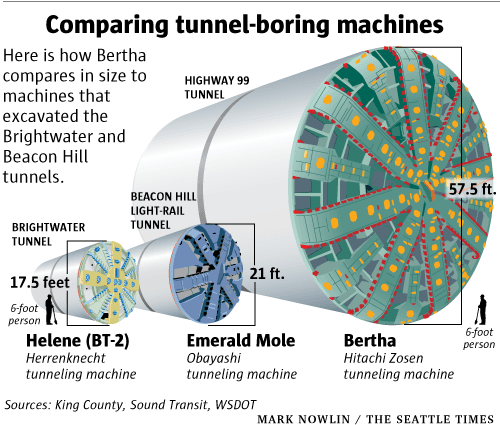
Tunnel boring technology. Large diameter TBMs bigger than Bertha can be built on Mars past a certain point, supplying water, living space, and materials to an entire city in one fell swoop. https://t.co/YNopkDsh6z
Asteroid mining and interplanetary trade. This paper says only a narrow set of economic conditions allow platinum and water mining to break even. But with an additional market having much shorter return trips, things look much more positive: https://t.co/mX2NioVn9y
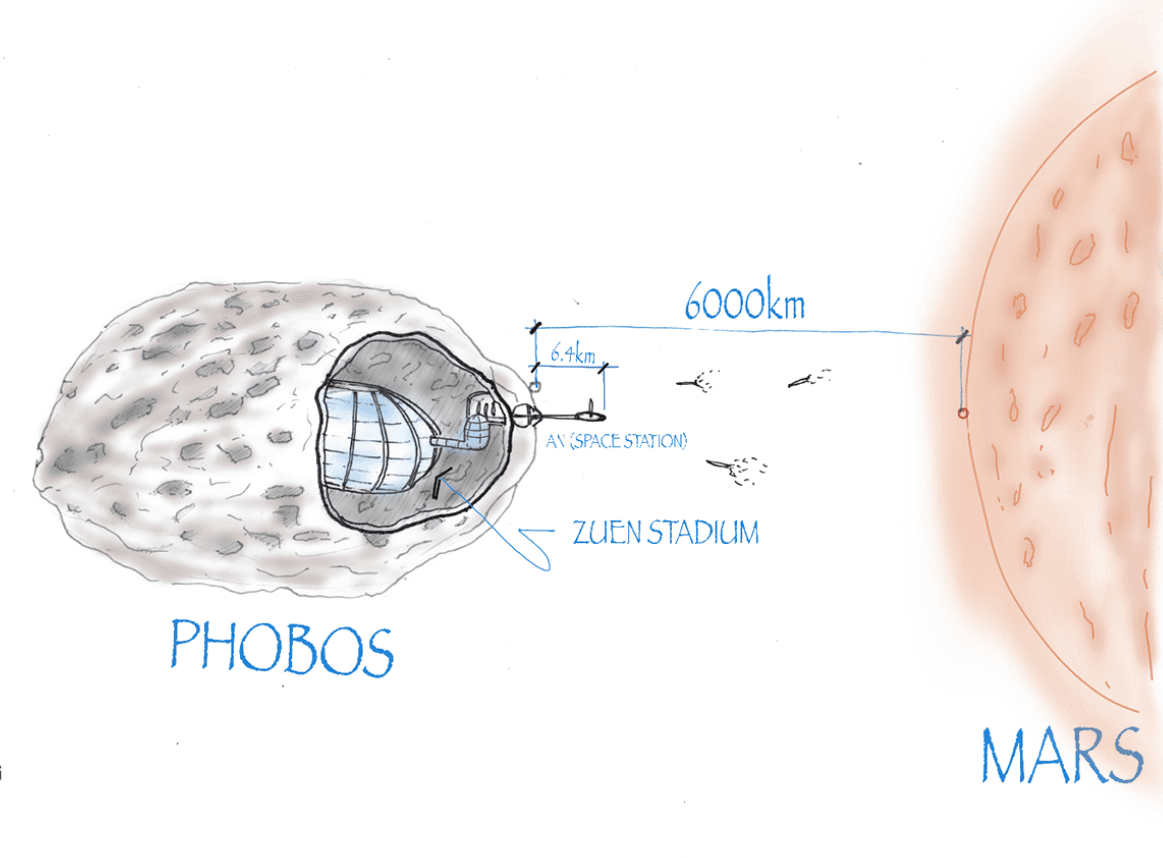
Space elevator. Hop's Blog calculates that a 2 x 3.2 km long space elevator can be anchored at Phobos using Zylon and can be extended thousands of km towards and away from Mars without breaking. https://t.co/AF3aNOoyti
Hell, if you convert Phobos into a standalone spaceport you can deliver cargo to Mars without having to climb its gravity well repeatedly. Plus, microgravity stadium anyone? (sketch c/o my younger cousin) https://t.co/24T6uUO5EL
Power. Mars is an opportunity to try thorium. Or more conventionally, Integrated Molten Salt Reactors (ISMR) can be carried piecemeal by 2-3 Starships and supply a whopping 190 MW of electrical power. https://t.co/9VnTi1u7ev
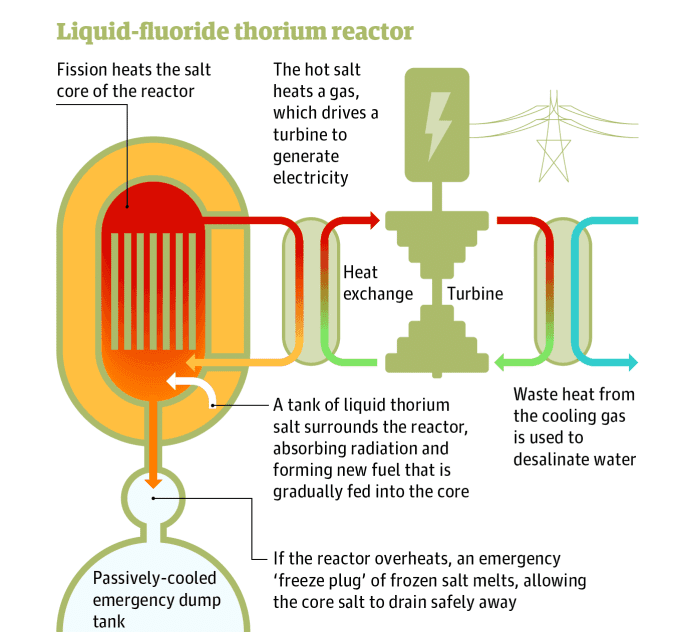
Indeed, since each person will require such a huge amount of energy we expect power to become the biggest industry on Mars by 2060 ($4.4T), barring disruptive innovation which *will* happen and will render this number tiny.
The conclusion is that Mars is a multitrillion dollar bill stuck to its place by glue, waiting for a careful but prospective team to pick it up. Mars will be the single biggest accelerator of economic growth in human history, and I mean this without irony.
And well, it's at least the beacon we need to get through this mess. https://t.co/Z6M5XMHw4Q
@TheMarsSociety is going to hold its 23rd annual convention on 15-18 Oct where 10 finalists will present their work. And they are looking for judges: https://t.co/lYZ6nftrMy
If you want to know more about the competition, here's their website: https://t.co/oX1W9y4T88 There are also opportunities to sponsor the event: https://t.co/cqM91FlrXc
If you want to know more about our entry, feel free to DM me or just wait and see if we make the cut. 😉 And thanks @robert_zubrin for inspiring us to do our best! We would never have entered without The Case for Mars. May we meet someday on red soil!
Oh and congrats @NASAPersevere for the successful launch! https://t.co/41oZAmOhz0